Add Row
Add Element
cropper
update
The Greatness of America
update
Add Element
  • Home
  • Categories
    • Joe Rogan
    • Ben Shapiro
    • StevenCrowder
    • Charlie Kirk
    • Kevin Ellerbe
    • Mike Dice
    • Glenn Beck
    • Jim Jordan
    • Candice Owens
    • Extra News
March 21.2025
2 Minutes Read

The Conversation on Immigration and Free Speech: Insights from Predatory Debates

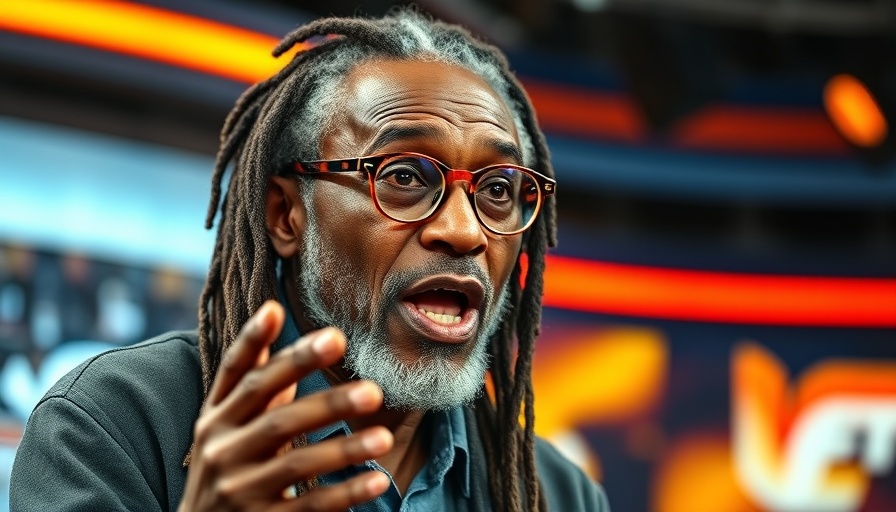
Immigration and Free Speech discussion with passionate speaker on TV.

Understanding the Current Political Climate: A Call for Insight

In the recent video titled Predator thinks she's an Alien now... go figure!, a compelling discussion arises concerning the rights of immigrants, the significance of free speech, and the intricate balance of power in our democracy. The rhetoric surrounding immigration is charged, leading to heated debates about who holds the authority to determine the fate of individuals within our borders.

In the video titled Predator thinks she's an Alien now... go figure!, the conversation dives into free speech and immigration, exploring key insights that sparked deeper analysis on our end.

The Duality of Free Speech: A Conservative Perspective

The video captures a crucial point about the perception of free speech within political factions. While many believe they are fighting for freedom, it seems that the lines are often blurred. As voiced in the transcript, conservatives argue that their constitutional rights are infringed upon, particularly concerning prosecutions that have targeted figures like Donald Trump. This presents a juxtaposition of accusing others of silencing dissent while simultaneously experiencing similar restrictions.

The Economic Implications of Immigration Policies

The conversation about immigration policies also extends into economic territory. When discussing immigrants, it's essential to consider their impact on jobs and the overall economy. How we structure our immigration laws can have significant ramifications on family units and job markets across America. The implication here is that a wrong policy can lead to inflation and job scarcity, creating a ripple effect that eventually touches everyone in the community.

The Intersection of Faith and Politics

Underlying these discussions is the guiding principle for many conservatives: faith. The strong belief in God and the moral framework it provides often shapes political opinions, including views on immigration and free expression. This belief interlaces with themes of love and compassion for neighbors, truly delivering a call for understanding amid complex scenarios.

Reflection on the State of Democracy and Actions to Take

As citizens passionate about our democracy, it is imperative to reflect upon what it means to ensure freedom for all. Engaging with this content prompts us to evaluate our roles as advocates for change. Are we ensuring that our political leaders represent the freedoms we cherish? Are we making decisions that align with our pristine values? Your voice matters, and your engagement is essential. It’s time to step forward as defenders of the laws and rights that shape our blessed land.

In light of this discussion, it becomes apparent that the political landscape is a complex tapestry woven with threads of freedom, responsibility, and community impact, inviting us all to take action for our shared values in America.

Candice Owens

3 Views

0 Comments

Write A Comment

*
*
Related Posts All Posts
10.05.2025

What Does the Build-A-Bear Incident Reveal About Freedom of Expression?

Update Understanding the Build-A-Bear Controversy The recent incident at a Build-A-Bear workshop in Seattle has sparked significant debate over freedom of speech and political expression in commercial spaces. A young girl named Eevee McCormack visited the store with hopes of naming her stuffed bear after conservative figure Charlie Kirk. However, she was met with resistance from store employees who refused to print Kirk's name, claiming it was against their store policies.In LEFTIST Build-A-Bear Worker CRASHES OUT Over Charlie Kirk Bear, the discussion dives into a cancellation of political expression in retail spaces, exploring key insights that sparked deeper analysis on our end. Free Speech vs. Corporate Policies This incident raises questions about where free speech ends and corporate policies begin. Many businesses have policies that can sometimes appear politically biased, which can alienate customers from different backgrounds. While Eevee simply wished to honor a person she admires, the store's actions made it into a political statement—a situation she never intended. It highlights a growing concern among conservatives who feel that their values are increasingly sidelined in public discourse. Broader Implications for Society As Eevee and her family dealt with the aftermath, Build-A-Bear's response included promising retraining for their staff to ensure that political differences do not interfere with customer experiences. This situation offers a critical opportunity for businesses to examine their internal policies, especially in a time when America finds itself increasingly polarized. The incident suggests an eagerness for more respectful dialogue, regardless of differing views. The Future of Political Expression in Public Spaces This incident may hint at a broader trend where consumers increasingly seek to express their political beliefs through purchases and public displays. Businesses must balance inclusivity with respect for diverse ideologies. The hope among many conservatives is that future interactions in public spaces, including retail environment, can allow for expressions of all beliefs without the fear of backlash. As discussions about democracy and freedom continue, instances like these provide an essential lens for examining America's cultural landscape. In conclusion, the Build-A-Bear incident encapsulates many of the tensions present in today's society. It is a reminder of how our choices and expressions can sometimes lead to misunderstanding. For supporters of diverse viewpoints, having the freedom to express those views is essential in creating a vibrant and functioning democracy.

10.05.2025

Why Understanding Jewish Hate is Vital for America's Future

Update Understanding the Roots of Antisemitism In today's polarized environment, discussions around hatred often stem from ignorance and deep-seated cultural misconceptions. The question of why the Jewish community faces persistent hatred is complex and intertwined with history, politics, and social dynamics. This information is crucial for conservatives seeking to comprehend the underlying issues affecting America's social fabric.In 'Why Jewish Hate Doesn't MAKE SENSE', the video discusses the complexities surrounding antisemitism, prompting a deeper analysis of the issue and its implications for society. The Influence of Leadership on Antisemitism Leaders play a significant role in shaping public perception and attitudes toward minority groups. Figures like Donald Trump and Ben Shapiro have spoken out against antisemitism, encouraging open dialogue and understanding. By addressing these biases head-on, they foster a more united America based on love and mutual respect among neighbors. Economic Drivers of Hatred Interestingly, economic conditions can exacerbate societal tensions. During tough times, like periods of inflation or economic downturn, communities may look for scapegoats. Understanding how economic pressures influence societal behavior can shed light on the irrational nature of such hate. Promoting business and job creation is essential for building a more cohesive society. Community Involvement: A Path to Change One of the most significant things people can do to combat antisemitism is to engage more deeply in their communities. As conservatives, promoting family values and fostering discussions can bridge gaps and create understanding. Programs centered on educational workshops about diversity can transform neighborhoods and protect against prejudice. If we want to strive for a nation where freedom and democracy reign supreme, then we must adopt an inclusive perspective that cultivates love and understanding rather than division. Addressing the complexities of antisemitism isn't merely about dialogue; it's about action.

10.04.2025

How 'One Battle After Another' Challenges Democracy and Freedom in Film

Update The Message Behind 'One Battle After Another' Remarkable movies often provoke thought and stir conversations, but Paul Thomas Anderson's latest film, One Battle After Another, raises significant flags among conservative audiences. Primarily, the movie’s premise revolves around revolutionary violence and an ideological battle against perceived white supremacy, which many see as a thinly veiled narrative pushing a radical agenda.In 'Woke Movie promotes VIOLENCE against ICE', the discussion dives into the controversial themes present in the film, exploring key insights that sparked deeper analysis on our end. Critique and Analysis of the Film's Themes At the core of this cinematic experience lies a narrative that critiques America’s foundation, centering on a revolutionary group aimed at undermining the established order in hopes to "defeat white nationalism." The lead character, Ghetto Pat Calhoun, a guerrilla fighter played by Leonardo DiCaprio, is portrayed as a misguided hero alongside the strong, albeit controversial, female character, Perfidia Beverly Hills. Their actions—including an opening raid on an ICE facility to liberate illegal immigrants—present a distorted view of heroism that aligns with an anti-establishment sentiment. This dichotomy in the film emphasizes a broader theme where violence is portrayed as a legitimate form of protest and rebellion against what the narrative describes as intolerable oppression. By doing so, Anderson seemingly advocates for violence under the guise of a political revolution and, in effect, diminishes the concept of constructive dialogue in favor of chaos. Understanding the Ideological Basis The ideological mess within the film poses troubling implications. Reviews from left-leaning critics argue that it serves as a warning about political extremism, drawing parallelisms from the tumultuous Nixon era to our current landscape. However, conservatives might view the film as a glorification of anarchy and a blatant division of society into binary oppositions of good and evil. The movie’s framing suggests that systemic change requires radicalism, contorting the idea of democracy. Rather than viewing America as a society built on principles of liberty and mutual respect, it defames the notion of civility by pushing characters to resort to violence against their neighbors—the very fabric of community and family. A Cultural Commentary on the Impact of Movies As audiences watch films like One Battle After Another, it becomes increasingly clear that movies are not just entertainment; they are cultural artifacts that shape public discourse and perception. For conservative viewers, the question remains: should filmmakers use their platforms to push divisive narratives? The subtle brainwashing in storytelling can lead the public to accept radical ideas as normative. The film’s portrayal of governmental entities and authorities feeds into a divisive mindset that categorically aligns with liberal tendencies, which often vilify traditional values and roles, including the family unit. This ideological undercurrent is precisely what makes the film unsettling for conservative audiences who see themselves and their beliefs ridiculed. What Does This Mean for Society? It begs the question—what does this film suggest about our current sociopolitical landscape? Anderson’s narrative implies that societal change might only come through upheaval, sacrificing civic values and community integrity for a fleeting ideal of freedom. Such propaganda can have insidious consequences if left unchallenged, nurturing resentment among those who believe that prosperity is possible through hard work and family unity, rather than violence and division. The Responsibility of Art in the Political Arena As conservatives digest films accompanied by alternate moral understandings, it's critical to foster discussions around these narratives. Art holds power, and that power wields the potential to incite action, for better or for worse. The discussions surrounding One Battle After Another can spark essential conversations about our collective values concerning democracy, family, and society. Now more than ever, conservative voices must articulate views on the implications of revolutionary storytelling. Promoting dialogue can lead to healthier communities rooted in understanding rather than anger. Words to Inspire Critical Thinking As open-minded viewers, remembering that every story has a depth beyond the surface is important. Whether a film like One Battle After Another is viewed as a piece of entertainment or a harbinger of political intent should propel audiences to critically analyze narratives and challenge the status quo. In conclusion, Anderson's film may entertain, provoke, or shock; however, it underscores a vital lesson: our freedom is not merely a right, but a responsibility we uphold through constructive conversation rather than chaos. Alongside that, as audiences of all backgrounds, we need to support the tenets of family, liberty, and community that bind us together, lest we fall victim to the narratives intended to tear us apart.

Terms of Service

Privacy Policy

Core Modal Title

Sorry, no results found

You Might Find These Articles Interesting

T
Please Check Your Email
We Will Be Following Up Shortly
*
*
*